
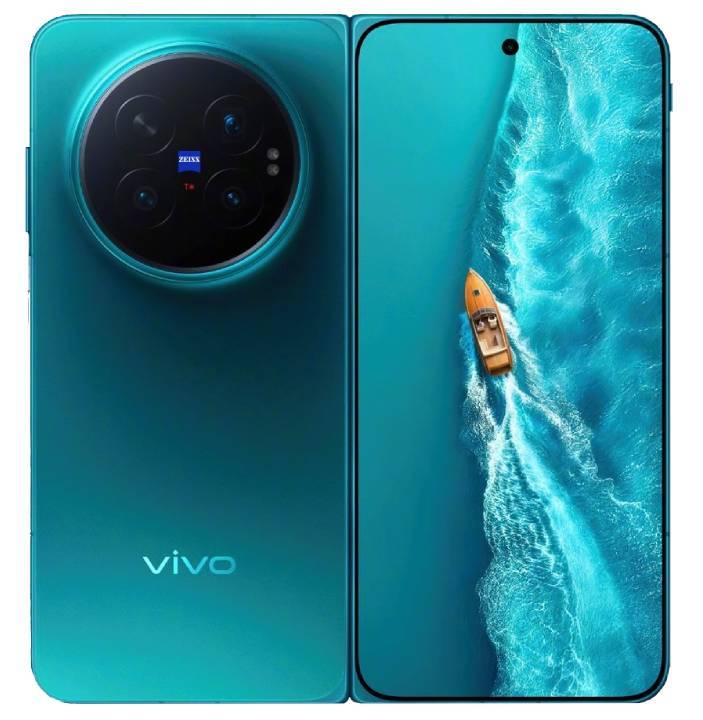
vivo launched the X Fold6 in China on June 26, positioning it as a premium book-style foldable that takes a more aggressive approach to two of the biggest compromises associated with foldable phones: battery life and camera versatility. Alongside a slimmer design, the X Fold6 brings a massive 7,000mAh battery and support for vivo's ZEISS G2 telephoto converter, giving the company a more distinctive camera proposition than simply adding increasingly powerful digital zoom.
The phone's China pricing starts at CNY 7,999 for the 12GB RAM and 256GB storage configuration. At the other end of the lineup, the Black Gold edition with 16GB of RAM and 1TB of storage costs CNY 11,299. That places the X Fold6 firmly in flagship foldable territory, although its official entry price is considerably lower than the CNY 9,999 price that had circulated in pre-launch reports.
7,000mAh Battery tackles a Major Foldable Weakness
Battery life has always been one of the most obvious challenges for book-style foldables. Unlike conventional smartphones, these devices have to accommodate two displays, a complex folding hinge, multiple cameras, cooling hardware, and other components inside a relatively thin chassis. The result is often a compromise between battery capacity, weight, and overall thickness.
vivo appears to be addressing that issue directly with the X Fold6's 7,000mAh battery. On paper, that is a substantial capacity for a foldable and even exceeds the 6,660mAh battery found in Honor's global Magic V6. Honor's China-market version, however, pushes the capacity further to 7,150mAh.
Real-world endurance will ultimately depend on more than battery size. Display brightness, refresh rate, chipset efficiency, camera usage, cellular connectivity, and how frequently users switch between the inner and outer screens can all have a significant impact.
Premium Display and Productivity-focused Hardware
The X Fold6 also puts considerable emphasis on its display technology. Its large 8.02-inch inner screen uses Samsung's M14 luminous material and is claimed to reach up to 5,000 nits of outdoor brightness, while also being capable of dropping down to just 1 nit in darker environments. That combination should make the panel easier to view outdoors while reducing eye strain and unnecessary brightness in low-light conditions.
Under the hood, the X Fold6 is powered by the Dimensity 9500 Super Edition chipset. It also supports an external-display desktop mode, giving the phone a stronger productivity angle. When connected to a larger external display, the feature can potentially turn the foldable into something closer to a compact desktop workstation, making the large internal screen and powerful hardware useful for more than entertainment and multitasking.
That combination of a large inner display, high-end chipset, and desktop functionality suggests that vivo is targeting users who want their foldable to function as both a smartphone and a productivity device.
Serious Camera Hardware inside the Foldable
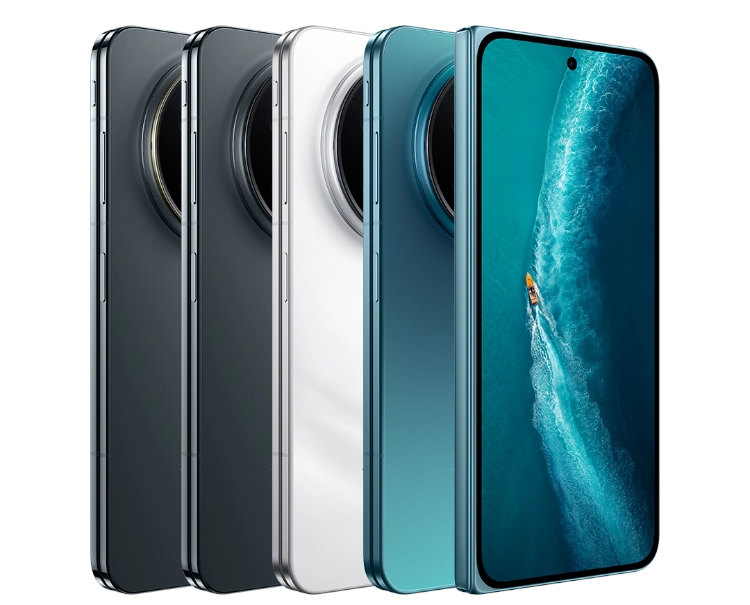
The built-in camera system is also more ambitious than what is typically found on foldable phones. The X Fold6 features a 200MP main camera with a 1/1.4-inch sensor, alongside a ZEISS APO Super Telephoto camera based on Sony's LYT-602 sensor. Image processing is handled by vivo's V3+ imaging chip.
On paper, those specifications give the X Fold6 the ingredients for a capable camera system. The large-resolution main sensor should provide plenty of detail and flexibility for cropping, while the dedicated telephoto hardware should offer better results at longer focal lengths than a conventional wide-angle-plus-digital-zoom setup.
ZEISS G2 Converter gives the Camera System a Unique Advantage
The most unusual part of the X Fold6's camera setup is arguably its support for the ZEISS G2 telephoto converter. Rather than relying entirely on the built-in telephoto camera, the physical accessory provides additional optical reach, enabling photographs equivalent to 200mm focal length.
This gives vivo a different approach to long-range photography on a foldable. Instead of depending primarily on sensor crops, computational photography, or increasingly aggressive digital zoom, the company is offering users an external optical accessory designed specifically to extend the phone's reach.
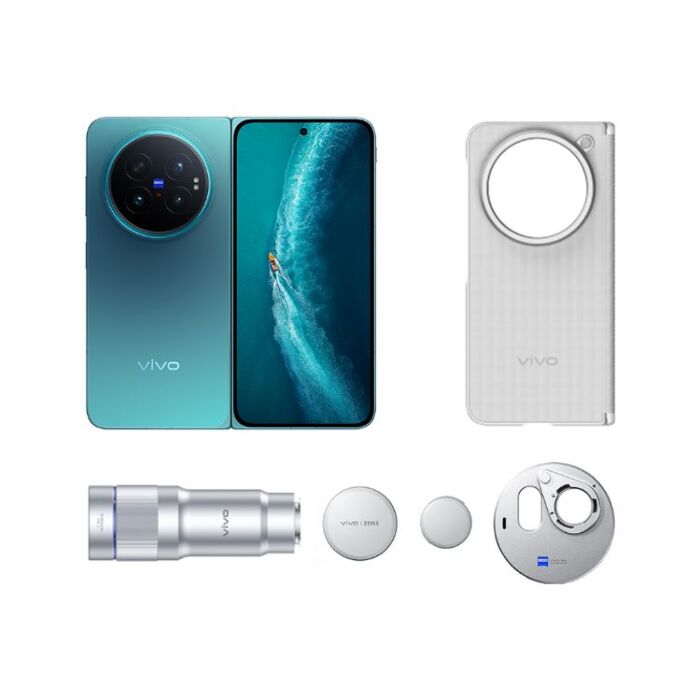
vivo has already been moving in this direction with the X300 Ultra, its current camera flagship, which supports external telephoto converter options. The accessory could make the X Fold6 particularly interesting for photography enthusiasts who want a foldable without giving up the ability to capture distant subjects. However, it also introduces some practical trade-offs. Users have to carry the converter separately, attach it when needed, and potentially pay extra for it depending on the sales package.
Durability Remains an Important Factor
vivo has highlighted IP58 and IP59 water-resistance capabilities as part of the phone's launch.
For buyers, however, the larger durability issue goes beyond an IP rating. Foldables still rely on mechanical hinges and flexible inner displays, both of which introduce potential points of failure that conventional slab-style smartphones do not have. The availability and cost of repairs, replacement displays, hinge servicing, and long-term software support could therefore be just as important as the phone's official water-resistance rating.
The Bigger Picture
The X Fold6 appears to be part of vivo's broader effort to make foldables less about compromise and more about flagship-level capabilities. Its 7,000mAh battery directly addresses endurance concerns, while the large high-end displays and desktop mode strengthen its productivity credentials. Meanwhile, the ZEISS G2 converter gives the phone a camera feature that stands out even in an increasingly competitive foldable market.
Ultimately, the X Fold6's most interesting proposition is that vivo isn't simply trying to make another thin foldable. It is attempting to address some of the format's traditional weaknesses while adding a camera accessory that could appeal to enthusiasts. If the battery delivers strong endurance and the camera system performs as well in real-world conditions as its specifications suggest, the X Fold6 could prove to be one of the more capable camera-focused foldables in its class.